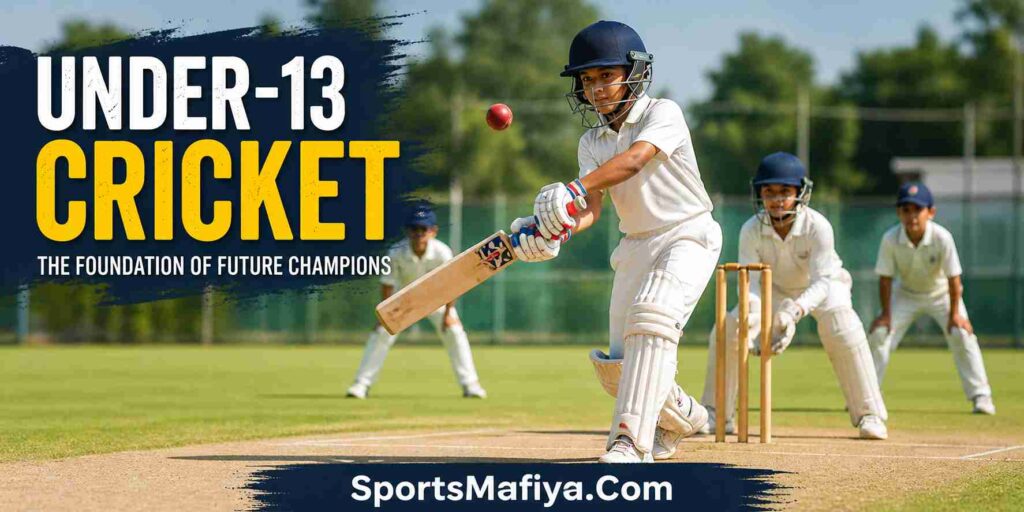

Under-13 Cricket is one of the most crucial stages in a young cricketer’s journey. It serves as the foundation of professional cricket, where children begin to learn the fundamentals of the game, develop discipline, and gain competitive exposure. At this level, the focus is not just on winning matches but on skill development, teamwork, and building a strong cricketing mindset.
Across countries like India, Australia, and England, structured grassroots systems supported by organizations like the Board of Control for Cricket in India and the International Cricket Council ensure that young talent is nurtured from an early age.
Key Highlights of Under-13 Cricket
| Category | Details |
|---|---|
| Age Group | Players below 13 years (usually 11–13 years) |
| Governing Bodies | BCCI, ICC, State Cricket Associations, School Boards |
| Match Format | 20–40 overs (limited-overs formats) |
| Pitch Size / Ground Dimensions | Slightly shorter boundaries depending on level |
| Team Composition | 11 players per team |
| Tournament Types | School, District, State, National |
| Equipment Used | Lightweight bats, protective gear, leather/tennis balls |
| Duration of Matches | 2–6 hours depending on format |
| Skill Level Focus | Basic to intermediate skills |
| Selection Pathway | School → District → State → Higher age groups |
| Key Objectives | Skill development, discipline, talent identification |
What is Under-13 Cricket?
Under-13 Cricket is an age-group category designed for young players under the age of 13. The eligibility is typically determined by a cut-off date set by governing bodies, ensuring fair participation.
Key Points:
- Players must be under 13 years old on a specific date.
- It is often the first competitive stage of organized cricket.
- Acts as a talent identification platform for future stars.
At this level, selectors and coaches begin identifying promising players who may progress to higher levels like Under-16 and Under-19 cricket.
Structure of Under-13 Cricket
Under-13 cricket is organized in a tiered system, allowing gradual progression:
School-Level Competitions
- Inter-school tournaments
- Foundation stage for beginners
District-Level Tournaments
- Selection from school teams
- Higher competition and exposure
State-Level Championships
- Organized by state associations under bodies like the Board of Control for Cricket in India
- Competitive and performance-driven
National-Level Opportunities
- Limited but available in structured systems
- Helps identify elite young talent
Rules and Playing Format
Under-13 cricket rules are designed to balance competition with development.
Match Format:
- 20-over (T20-style) or 30–40 overs matches
- Some tournaments use limited overs format
Key Rules:
- Bowling restrictions (limited overs per bowler)
- Fielding restrictions to ensure safety
- Emphasis on fair play and learning
Adaptations:
- Shorter boundaries
- Controlled match duration
- Flexible rules for beginners
Skills Developed in Under-13 Cricket
This stage focuses on building strong fundamentals:
Batting
- Grip, stance, and shot selection
- Timing and footwork
Bowling
- Basic techniques (line and length)
- Introduction to spin and pace
Fielding
- Catching, throwing, and agility
- Coordination and reflexes
Fitness
- Speed, stamina, and flexibility
Soft Skills
- Teamwork
- Discipline
- Game awareness
Coaching and Training
Coaching plays a critical role in Under-13 Cricket.
Key Aspects:
- Structured training sessions
- Skill-based drills
- Match simulations
Role of Academies:
- Provide professional coaching
- Focus on long-term development
Development Focus:
- Physical fitness
- Mental strength
- Game understanding
Equipment Used in Under-13 Cricket
Young players use age-appropriate equipment for safety and performance:
Essential Gear:
- Lightweight cricket bat
- Helmet with grill
- Batting pads and gloves
- Abdominal guard
- Cricket shoes
Ball Types:
- Tennis ball (beginners)
- Leather ball (advanced level)
Major Under-13 Tournaments
While not as widely publicized as senior tournaments, Under-13 cricket includes:
- Inter-school championships
- District-level leagues
- State cricket association tournaments
- Academy-based competitions
These tournaments act as stepping stones for young cricketers.
Pathway to Professional Cricket
Under-13 cricket is just the beginning:
Progression Path:
- Under-13 → Under-16 → Under-19 → Senior cricket
Importance:
- Performance tracking
- Selection trials
- Skill consistency
Many international stars started their journey in grassroots systems supported by the International Cricket Council.
Benefits of Playing Under-13 Cricket
Physical Benefits:
- Improves fitness and coordination
Mental Development:
- Enhances focus and decision-making
Career Opportunities:
- Opens doors to professional cricket
Personality Growth:
- Builds confidence and leadership
Challenges Faced by Young Players
Common Issues:
- Academic pressure
- Competitive stress
- Limited access to facilities
Solutions:
- Balanced routine
- Supportive coaching
- Encouragement over pressure
Tips for Young Cricketers
- Practice regularly and consistently
- Focus on fundamentals
- Stay disciplined and patient
- Learn from mistakes
- Maintain fitness and diet
👨👩👧 Role of Parents and Coaches
Parents Should:
- Encourage without pressure
- Support both academics and sports
Coaches Should:
- Focus on development over results
- Provide constructive feedback
A positive environment is essential for growth.
Future of Under-13 Cricket
The future of Under-13 Cricket looks promising:
Trends:
- Increased grassroots investment
- Rise of cricket academies
- Use of technology in training
Opportunities:
- Better scouting systems
- More tournaments
- Global exposure
❓ FAQs – Under-13 Cricket
| 1. What is the age limit for Under-13 Cricket? |
|---|
| Players must be under 13 years as per official cut-off dates. |
| 2. What format is used in Under-13 Cricket? |
| Usually limited-overs formats like 20–40 overs. |
| 3. Is Under-13 Cricket important for a career? |
| Yes, it builds the foundation for higher-level cricket. |
| 4. What equipment is required? |
| Basic cricket gear like bat, pads, gloves, and helmet. |
| 5. How can a child get selected? |
| Through school, district, and state-level performances. |
| 6. Are matches played with a leather ball? |
| Yes, at advanced levels; beginners may use tennis balls. |
| 7. Can girls play Under-13 Cricket? |
| Yes, many associations have separate categories for girls. |
| 8. How often should kids practice? |
| Regular practice (4–5 days a week) is ideal. |
| 9. What skills are most important? |
| Batting basics, bowling accuracy, and fielding skills. |
| 10. Who organizes Under-13 tournaments? |
| School boards and cricket bodies like the Board of Control for Cricket in India. |
Final Thought
Under-13 Cricket is the backbone of cricket development, shaping young talent into future professionals. With proper guidance, training, and support, it provides a strong platform for aspiring cricketers to grow, compete, and succeed at higher levels.
Whether you are a parent, coach, or young player, investing time and effort in this stage can make a lifelong impact on a cricketing career.